About Insulated Thermocouple
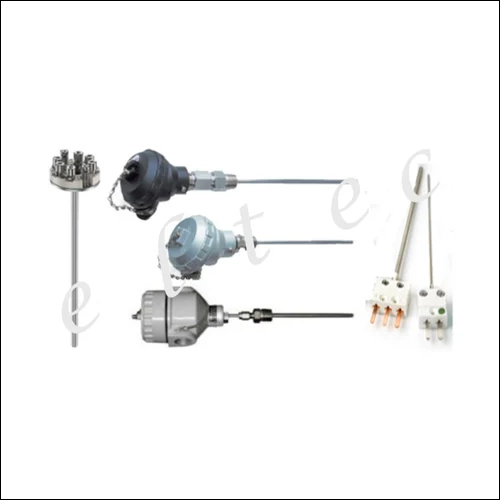
THERMOCOUPLES are designed to suit various applications. Thermocouple assemblies are generally used to measure temperature up to 1800 C.
TYPES OF THERMOCOUPLE
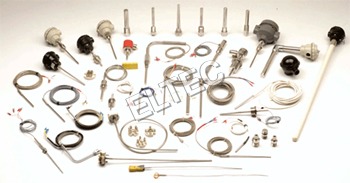
- Bayonet Thermocouple Assemblies of various types up to 600 C
- Sheathed Thermocouple in various sizes for temperature applications up to 1200 C.
- High Temperature Ceramic Sheathed Thermocouple for applications up to 1800 C.
- Mineral Insulated Thermocouple assemblies for sponge iron & other industrial applications.
Industries Served
- Power
- Steel & Sponge Iron
- Metals & Mining
- Cement
- Fertilizers
- Chemicals & Petrochemicals
- Plastics
- Glass
- Textiles
- Pharmaceuticals And Many More
TECHNICAL SPECIFICATIONS
Element
THERMOCOUPLE:
J (Fe / Const) 0 - 700 C
T (Copper / Const) 0 - 400 C
E (Chromel / Const) 0 - 800 C
K (Chromel Alumel) 0 - 1100 C
R (Pt / Pt - Rh 13%) 0 - 1500 C
S (Pt / Pt - Rh 10%) 0 - 1500 C
B (Pt - Rh 6%/ Pt - Rh 30%) 0 - 1700 C
G,C,D (Tungsten / Rhenium) 0 - 2400 C
Sheath Material
SS 304 / SS 310 / SS 316 / Inconel / HRS 446 / Ceramic KER 710 & 610
Sheath O.D.
3mm to 35 mm or more
Junction
Grounded / Ungrounded / Open
Insulation
Mineral / Ceramic
Element
Simplex / Duplex / Triplex
Termination
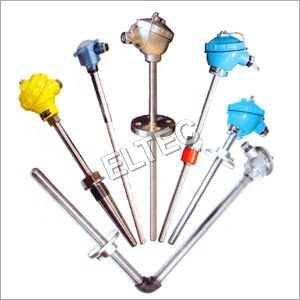
HEAD Flame proof or Weather Proof Cast Aluminum /SS /C.I.
Seal Pot with Male / Female Connectors
SS base plate with flying leads for Temp. Transmitters
Mounting
, 3/8 , , BSP Thread / Adjustable or Fixed Flange
Termination
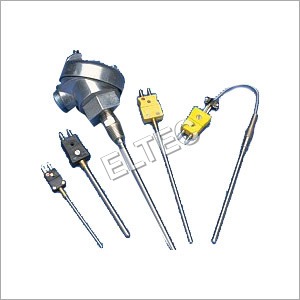
Flame Proof or Weather Proof Head with Single, Double entry from Cast Aluminum / Cast Iron / SS / Plastic
Seal Pot with flying leads
Seal Pot with Male / Female Connectors (QRT)
Ceramic Terminal Block with SS Base Plate
SS Base Plate with flying leads for Temperature Transmitter
Exceptional Precision for Industrial ApplicationsEngineered for reliability and accuracy, the insulated thermocouple delivers high-precision temperature readings in demanding environments such as furnaces, ovens, heat treatment facilities, and laboratories. Its robust construction with nickel alloys and stainless steel ensures durability even at elevated temperatures up to 1380C, making it suitable for a wide array of industrial sectors.
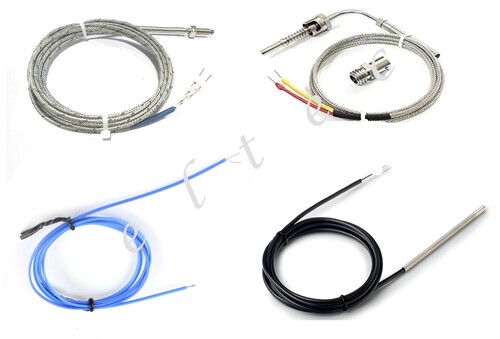
Customizable Design for Diverse NeedsCustomization options include wire lengths, sheath diameters, and core configurations (single or double element). Users can select insulation from fiberglass or Teflon based on process requirements, and choose from various lead termination styles. The thermocouples flexibility supports unique project specifications, catering both standard and specialized installations.
FAQs of Insulated Thermocouple:
Q: How is the insulated thermocouple installed in industrial settings?
A: Installation involves securing the stainless steel sheath into the process environment, connecting the bare ends, lugs, or plugs to the monitoring system, and ensuring proper insulation type (fiberglass or Teflon) and core configuration are selected to suit application requirements.
Q: What benefits does a fast response time (13 seconds) provide?
A: A rapid response time ensures timely, accurate temperature measurement, crucial for processes like heat treatment and laboratory analysis where temperature fluctuations need immediate attention.
Q: Where can the thermocouple be used for optimal performance?
A: The thermocouple excels in industrial environments such as furnaces, ovens, and heat treatment applications, as well as laboratory settingsanywhere high-accuracy and durability are vital for process control.
Q: When is customization of wire length or sheath size recommended?
A: Customization is advised when standard dimensions do not align with specific installation requirements, providing optimal fit and reliable performance in unique or constrained setups.
Q: What is the process for selecting a suitable output signal and connection type?
A: Choose the output signal (millivolt) and lead termination style based on your monitoring systems compatibility, and select terminal or direct cable connections as per process setup needs.
Q: How does the thermocouples high precision benefit industrial operations?
A: High precision ensures consistent measurement within 1.5C or 0.4% tolerance, improving process control, product quality, and operational safety.
Q: What are the usage advantages of stainless steel protecting tubes and high tensile strength insulation?
A: Stainless steel provides excellent durability and resistance to corrosion and high temperatures, while strong insulation maintains signal integrity in challenging environments, supporting long-term reliable use.







 Send Email
 Send Inquiry

 Send Inquiry
 Send Inquiry
 Send SMS
 Call Me Free
 English
 Spanish
 French
 German
 Italian
 Chinese (Simplified)
 Japanese
 Korean
 Arabic
 Portuguese