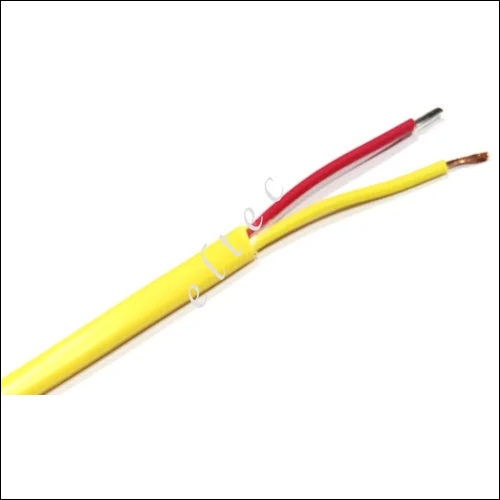
About N TYPE PTFE THERMOCOUPLE WIRE
PTFE
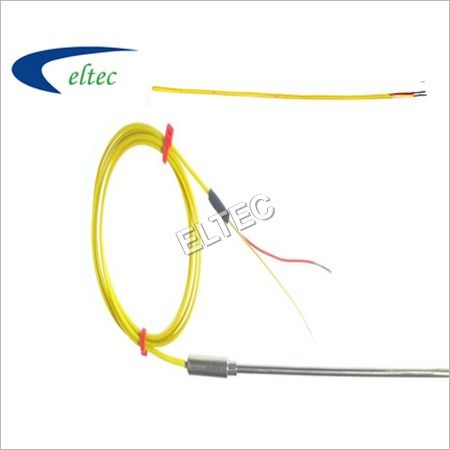
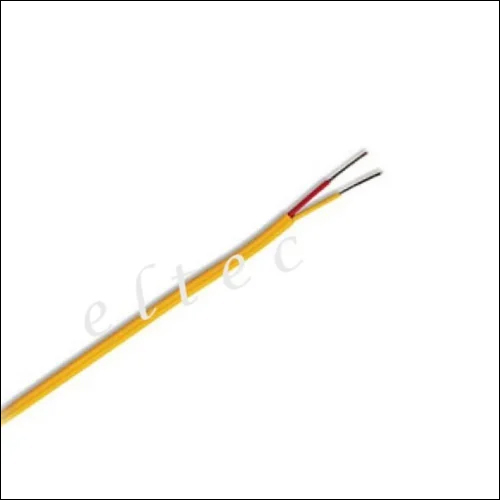
N TYPE thermocouple wire is commonly used to link the thermocouple to control instrumentation. It may also be used to build the sensing point and can be used as a N TYPE THERMOCOUPLE SENSOR or used in manufacturing THERMOCOUPLE ASSEMBLIES or can used to connect to DATA LOGGERS via THERMOCOUPOLE CONNECTORS.
PTFE Insulation becomes an excellent solution where chemical fumes & other liquids make all type of Insulation vulnerable as it is chemically inert to most of industrial chemicals. It has outstanding mechanical & electrical properties and temperature range from -65 C to 260 C
| TYPE OF TC | Metal Alloy + ve leg | Metal Alloy ve leg | Measuring Temp. Range |
|---|
| N | Ni Cr Si | Ni Si Mg | -270 C - 1300 C |
| Grade | Sprak Testing | Die Electric Testing |
|---|
| ET (250 V) | 2500 V ACrms | 1500 V ACrms |
| Conductor | Solid or Multi stranded Original THERMOCOUPLE GRADE |
| Core Insulation | FUSED PTFE Insulation |
| Core Laying | Parallel or twisted |
| No. of Pair | 1, 2 or more |
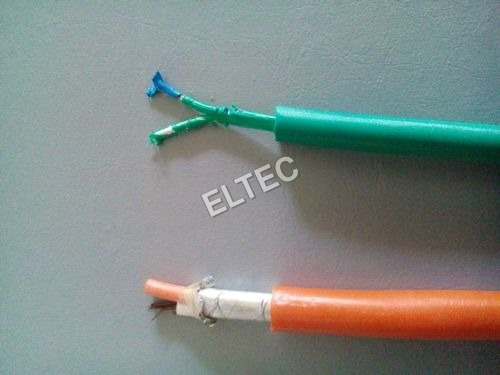
| Outer Sheath | FUSED PTFE / VARNISHED FIBER GLASS as reqd. |
| Outer Jacket | Outside SS Metal Braided |
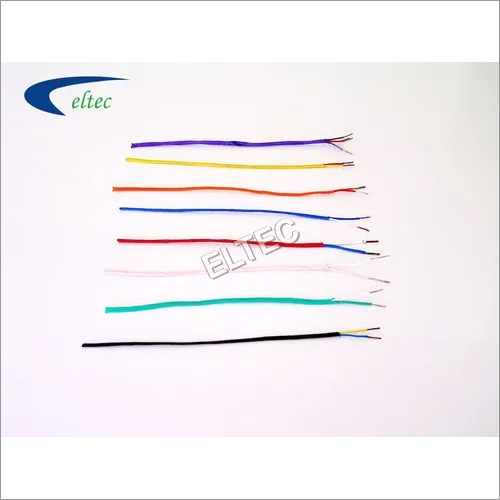
| Color Coding | As per IEC, ANSI, BS, DIN, NFC, JIS etc. Refer table |
| Packing | 100 Mtrs. coil or 500 Mtrs. spool |
N Type Thermocouple Wire with PTFE Insulation features
High dielectric values resulting in excellent resulting in space & weight saving
Wide operating temperature from -65 C to 260 C
Inert to most chemicals & fluids even at elevated temperature & pressure.
Unaffected by oils, lubricants & hydraulic fluids
Non flammable, non toxic, resistant to solder iron damage.
Suitable for high frequency operation.
Immune to agene, fungus & water absorption.
Resistance to UV resistance & stress creaking.
High strain & abrasion resistance.N TYPE PTFE Thermocouple Wire delivers reliable temperature sensing in harsh environments, thanks to its robust PTFE insulation and high dielectric strength. Its lead-free, flame-retardant jacket ensures safe operation even under extreme temperatures ranging from -200C to +125C. This cable is ideal for industries requiring accurate and consistent temperature control.
Versatile Applications Across IndustriesThis thermocouple wire meets ANSI/IEC standards and can be customized for length, size, and connectors, supporting broad industrial, process control, and laboratory applications. Its excellent chemical and humidity resistance make it perfect for corrosive settings, while its flexibility and tensile strength provide ease of installation and longevity.
FAQs of N TYPE PTFE THERMOCOUPLE WIRE:
Q: How is the N TYPE PTFE Thermocouple Wire typically installed in industrial environments?
A: Installation involves connecting bare wire ends to measurement devices or using custom connectors as needed. Its high flexibility and tensile strength make it easy to route through complex setups, and it can be cut to custom lengths to fit specific requirements.
Q: What benefits does PTFE insulation provide for this thermocouple wire?
A: PTFE insulation ensures outstanding chemical and humidity resistance, high dielectric strength, and flame retardancy, safeguarding the wire against harsh substances and extreme temperatures, while maintaining flexibility and structural integrity.
Q: Where can the N TYPE PTFE Thermocouple Wire be used?
A: It is suitable for process control, industrial temperature measurement, laboratory experimentation, and any application in harsh or corrosive environments, thanks to its robust chemical resistance and compliance with international standards.
Q: What is the process for ordering custom sizes or lengths?
A: Customers can specify their required cable length and diameter when placing orders with the manufacturer or supplier. Options include both solid and stranded conductor types, and orders can be tailored with or without braided shielding to suit specific needs.
Q: Why is flame retardancy important in thermocouple wire applications?
A: Flame retardancy minimizes fire risks in environments where high temperatures or electrical faults may occur, ensuring added safety for industrial and laboratory applications.
Q: What kind of conductor is used in this thermocouple wire, and what is its advantage?
A: It uses a Nickel-Chromium-Silicon alloy conductor (N Type), known for stable and accurate temperature sensing across a broad temperature range and in corrosive conditions, making it ideal for industrial-grade usages.
Q: Is the N TYPE PTFE Thermocouple Wire compliant with international standards and environmental regulations?
A: Yes, it complies with ANSI and IEC standards for thermocouples and is RoHS certified, meaning it is lead-free and suitable for environmentally conscious operations.







 Send Email
 Send Inquiry

 Send Inquiry
 Send Inquiry
 Send SMS
 English
 Spanish
 French
 German
 Italian
 Chinese (Simplified)
 Japanese
 Korean
 Arabic
 Portuguese